
Stop Recurring Leaks With Updated Underground Systems
Water Line Replacement in Hot Springs for aging pipes, recurring failures, and discolored water issues
When a second or third repair happens on the same water line within a few years, the problem shifts from isolated damage to systemic failure across the entire underground run. Anchor Plumbing provides water line replacement for residential homes, commercial buildings, and new construction properties throughout Hot Springs, Bryant, Hot Springs Village, and surrounding areas where aging pipes no longer hold pressure reliably. Galvanized steel lines installed before 1970 develop internal corrosion that narrows the pipe diameter and creates recurring pinhole leaks, while polybutylene systems from the 1980s become brittle and crack at connection points.
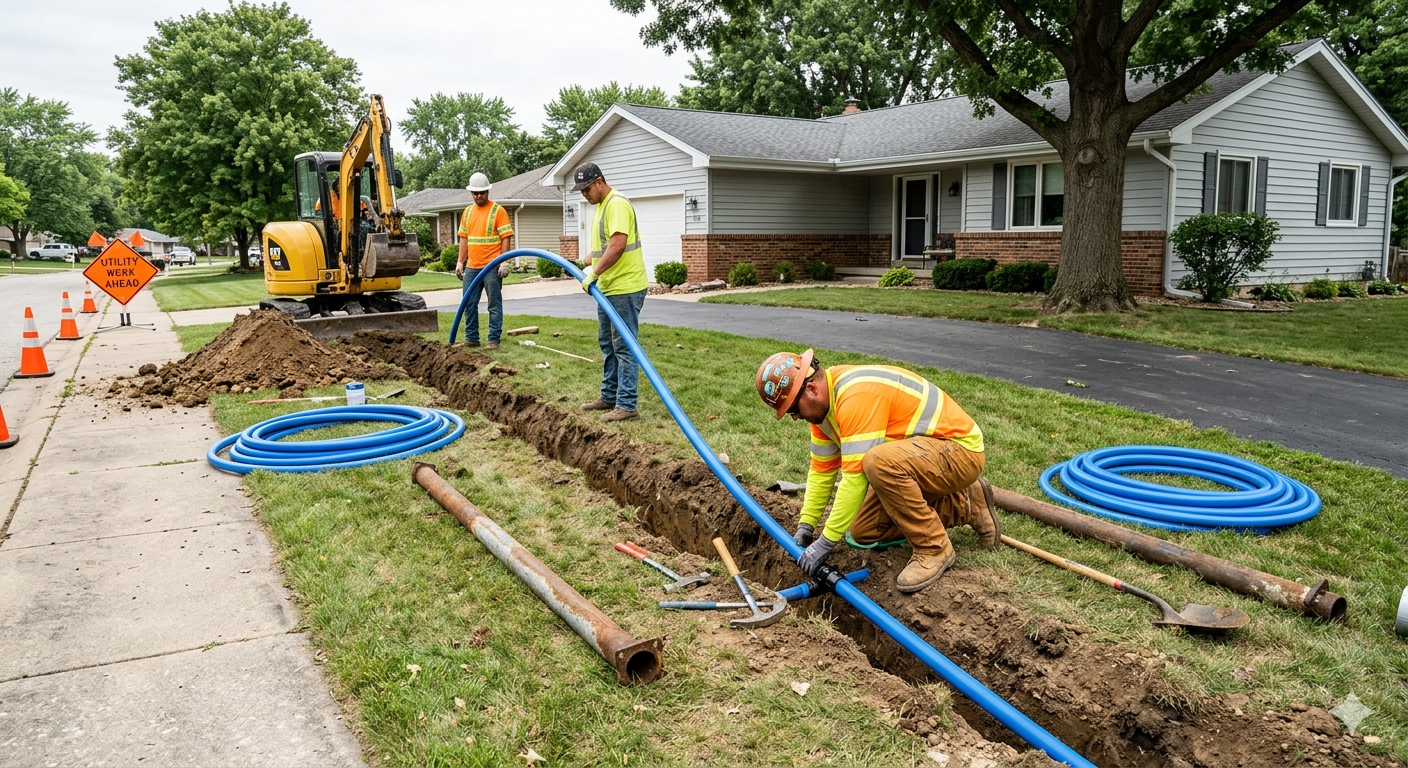
Replacement involves removing the entire water line from the meter connection to the building entry point and installing new piping designed to resist corrosion and soil movement. Professional excavation follows the existing line path to minimize landscape disruption while allowing access for proper bedding and compaction.
Schedule a replacement estimate to review your current water line condition and material options.
What Full Water Line Replacement Prevents
Water line replacement eliminates the cycle of temporary repairs by installing corrosion-resistant materials rated for decades of service under central Arkansas soil conditions. Modern HDPE or copper piping withstands the expansion and contraction caused by seasonal temperature swings and resists the mineral buildup that eventually closes off older galvanized pipes.
Once replacement work completes, water pressure stays consistent even when multiple fixtures run simultaneously, discoloration from corroded pipe interiors disappears permanently, and your water meter reading stabilizes without the unexplained usage spikes that signal hidden leaks. The lawn area above the new line settles back to grade within weeks as soil compaction matches the surrounding yard.
The replacement process includes coordinating utility locates to avoid conflicts with gas, electric, and communication lines, trenching to the required depth for frost protection, and pressure testing the entire new system before backfilling. All connections receive inspection to verify proper joining methods, and the trench is restored with compacted fill and topsoil grading.
Common Questions About Water Line Replacement
Replacing an underground water line represents a significant project, and property owners want clarity on what the work involves before moving forward.
How do I know if replacement is necessary instead of another repair?
Poor water pressure that persists after repairs, brown or rust-colored water that never fully clears, and multiple leak incidents within a short timeframe all indicate that the pipe material itself has degraded beyond the point where isolated fixes make sense.
What pipe materials work best for Hot Springs soil conditions?
High-density polyethylene resists corrosion completely and flexes with soil movement, while Type K copper provides durability in stable soil with proper bedding to prevent stress at joints.
How much yard disruption should I expect during replacement?
Trenching typically runs eighteen to thirty inches wide along the water line path, and professional excavation minimizes the footprint by following the existing route rather than cutting new paths through landscaping.
When is the best time to replace a water line?
Dry weather periods allow easier excavation and faster soil compaction, though urgent replacements proceed year-round when active leaks threaten foundations or cause service interruptions.
What testing happens before the new line goes into service?
Pressure testing holds the system at one and a half times normal operating pressure for several hours to verify that all joints and connections remain leak-free under stress conditions.
Anchor Plumbing installs replacement water lines throughout Hot Springs and neighboring communities with excavation practices that protect existing utilities and landscaping. Request an assessment of your current system to determine whether replacement will resolve recurring pressure and quality concerns.