
Underground Systems Rebuilt for Reliable Drainage
Sewer Line Replacement in Hot Springs for collapsed pipes, severe corrosion, and repeated backup problems
Sewer line replacement becomes necessary when underground pipes have deteriorated beyond the point where localized repairs provide lasting solutions, typically after decades of service have corroded cast iron, cracked clay tile, or caused multiple sections to collapse under shifting soil loads. Anchor Plumbing installs new sewer lines for residential, commercial, and construction projects throughout Hot Springs, Malvern, Hot Springs Village, and surrounding areas, addressing failures that produce chronic backups, persistent leaks, and drainage systems no longer capable of handling waste flow. Properties with original sewer installations from fifty or sixty years ago often reach the point where the entire line requires replacement rather than ongoing repair attempts that fail within months.
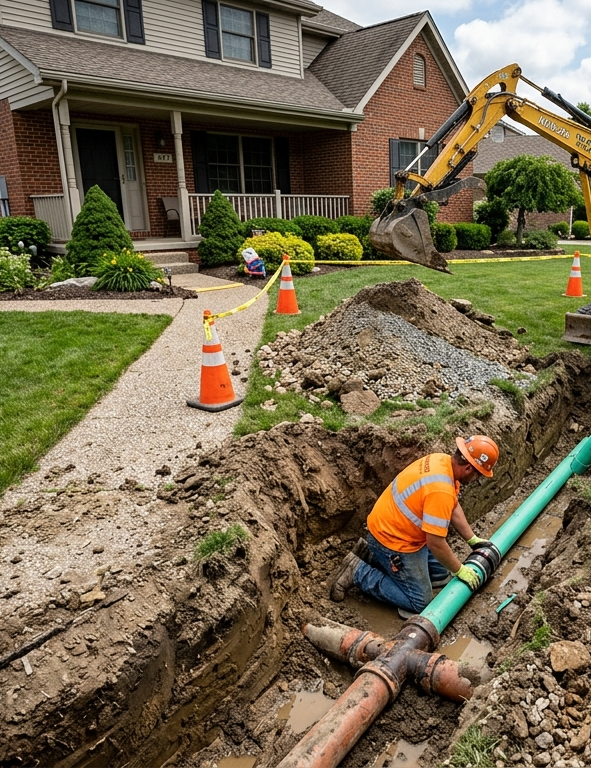
Sewer line replacement involves excavating access to the damaged pipe, removing deteriorated sections, and installing new sewer pipe with proper slope and modern materials resistant to corrosion and root intrusion. The work requires careful excavation to minimize disruption to landscaping, driveways, and hardscaping, though some surface disturbance remains unavoidable when accessing pipes buried four to six feet underground. Replacement projects coordinate with property layout to route new lines away from mature tree root zones when possible and position cleanout access points for future maintenance without additional excavation.
Request a sewer line evaluation to determine whether your system requires complete replacement or if targeted repairs can restore reliable drainage function.
What Proper Sewer Replacement Accomplishes
Professional sewer line replacement produces drainage systems with consistent slope throughout the entire run, preventing low spots where solids settle and cause blockages, and uses modern pipe materials that resist corrosion, maintain structural integrity under soil loads, and provide joint connections that remain sealed against root intrusion for decades. Installation includes positioning cleanouts at strategic intervals so future maintenance can access the line without excavation and verifying final grade allows gravity drainage without relying on pumps or mechanical assistance. Proper replacement eliminates the cycle of repeated repairs on failing infrastructure.
After sewer line replacement completes, drainage returns to the immediate, complete function expected from new installations, with toilets flushing fully on every cycle, fixtures draining quickly without gurgling or slow clearance, and no sewage odors appearing around the property. The new system handles wastewater flow from all fixtures simultaneously without backing up during peak use periods.
Replacement projects also address situations where original sewer sizing proves inadequate for current fixture counts, where additions to the property overload the existing line's capacity, or where outdated materials no longer meet code requirements. The work provides an opportunity to correct routing problems, improve access for future service, and install systems engineered for the property's actual drainage demands rather than inheriting whatever was installed decades earlier.
Questions Before Starting Replacement Projects
Property owners facing sewer line replacement in the Hot Springs area typically need information about the process, disruption, and long-term benefits before proceeding with installation.
What conditions require full sewer line replacement instead of repairs?
Collapsed pipe sections, severe corrosion that has thinned walls throughout the line, multiple failure points along the run, or repeated backups after previous repairs all indicate deterioration beyond what localized fixes can address reliably.
How is sewer line replacement performed to minimize property disruption?
Excavation follows the existing sewer route when possible, using equipment sized appropriately for residential access, and restoration includes compacting backfill, replacing sod or landscaping materials, and repairing any hardscaping disturbed during installation.
When should sewer replacement be scheduled for Hot Springs properties?
Replacement projects proceed most smoothly during dry weather when soil conditions allow efficient excavation and compaction, typically avoiding winter months when ground saturation and freezing temperatures complicate underground work.
Why does proper sewer slope matter for long-term drainage performance?
Sewer lines require consistent downward slope, typically one-quarter inch per foot, so gravity moves waste without sections draining too quickly and leaving solids behind or too slowly and allowing accumulation that eventually blocks flow.
Why does proper sewer slope matter for long-term drainage performance?
Sewer lines require consistent downward slope, typically one-quarter inch per foot, so gravity moves waste without sections draining too quickly and leaving solids behind or too slowly and allowing accumulation that eventually blocks flow.
Anchor Plumbing handles sewer line replacement for properties throughout Central Arkansas where underground drainage systems have reached the end of their functional service life and require complete installation of new infrastructure. Arrange a sewer evaluation to assess your system's condition and receive replacement recommendations with project scope clearly defined before excavation begins.