
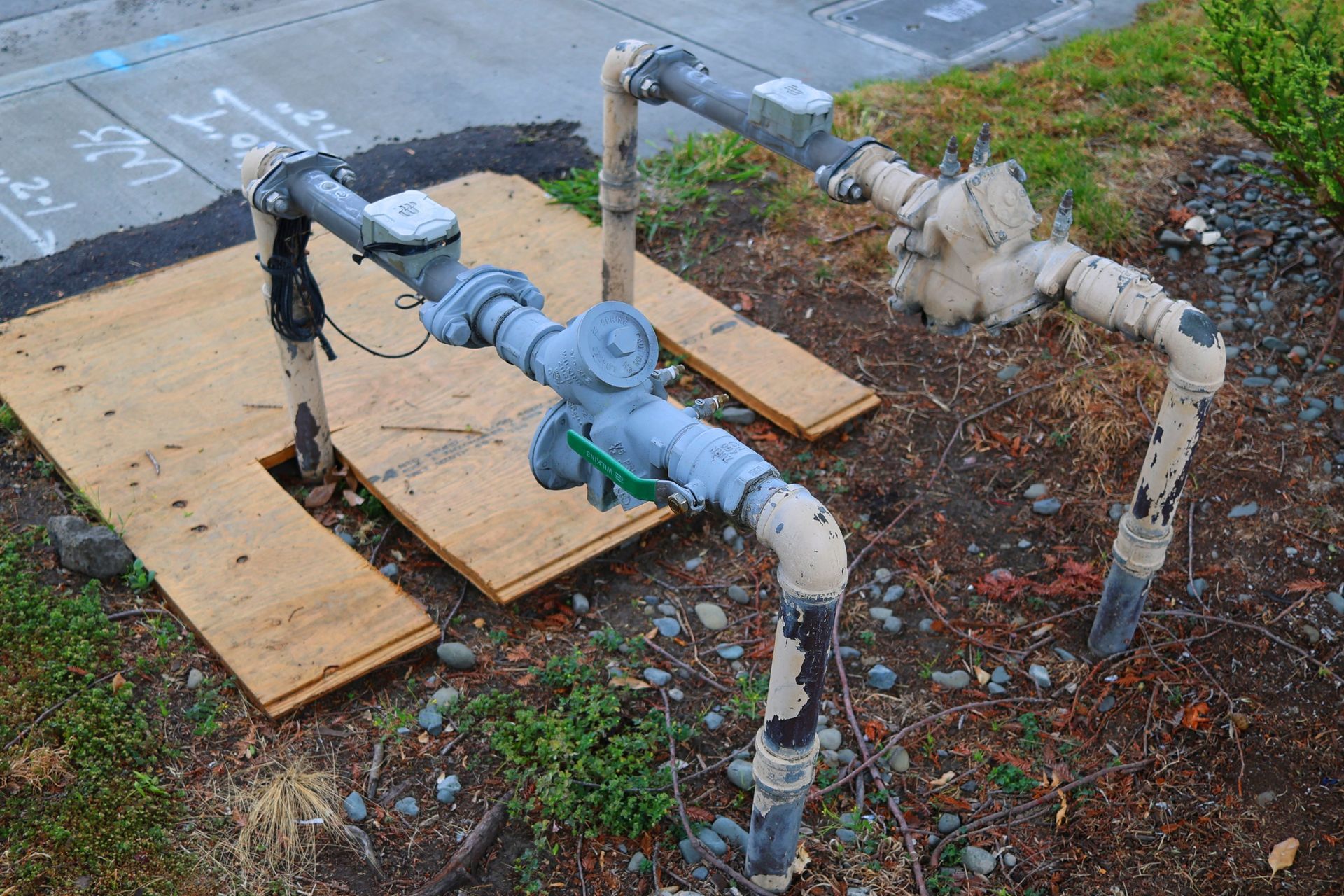
Backflow Prevention That Meets Code Requirements
RPZ Installation in Hot Springs for irrigation systems, commercial properties, and facilities requiring backflow protection
Reduced pressure zone devices prevent contaminated water from reversing direction and entering the potable water supply when pressure drops occur in municipal water lines. Anchor Plumbing installs RPZ assemblies on irrigation systems that use fertilizers or pesticides, commercial facilities with chemical injection systems, industrial operations with process water connections, and any application where non-potable water could backflow into drinking water lines. The installation ensures compliance with plumbing codes that mandate backflow prevention devices on connections posing contamination risks to public water systems.
RPZ devices contain two independent check valves separated by a pressure-monitored chamber that opens a relief valve if the zone between the checks experiences a pressure increase, which indicates one of the check valves has failed. This design provides redundant protection—if backpressure or backsiphonage overcomes the first check valve, the relief valve discharges water to the ground rather than allowing it to continue upstream into the potable supply.
Schedule installation planning to determine the correct device size and placement for your water system configuration in Hot Springs, Benton, Bryant, and surrounding areas.
How RPZ Devices Protect Water Systems
Installation begins with sizing the device to match the flow rate and pressure requirements of the system it protects, then positioning it at least twelve inches above grade to prevent submersion during flooding and to allow the relief valve to discharge freely without creating a cross-connection. The device is installed downstream of the water meter on the service line, with shutoff valves and test cocks positioned according to the manufacturer's specifications to facilitate annual testing and maintenance.
Once the RPZ assembly is installed and tested, property owners gain verifiable protection against backflow contamination and meet the regulatory requirements that municipal water authorities enforce for connections presenting contamination hazards. The relief valve will discharge water visibly if a pressure reversal occurs, providing a clear indication that the device is actively preventing backflow rather than failing silently.
RPZ installations require annual testing by certified backflow testers who verify that both check valves seat properly, the relief valve opens at the correct pressure differential, and the assembly maintains the minimum pressure drop across the device. Testing confirms continued protection and compliance with local water authority regulations that mandate functional backflow prevention on hazardous connections.
Answers to Common Installation Questions
RPZ installation involves regulatory compliance, correct device selection, and placement considerations that affect system performance. These questions address what property owners should understand before installation begins.
What types of properties require RPZ devices?
Commercial properties with fire suppression systems, irrigation systems using chemical injection, medical or dental facilities with aspirator connections, industrial operations with process water lines, car washes, restaurants with carbonation systems, and any facility where non-potable water could reverse into the drinking water supply under pressure loss conditions require backflow prevention.
How does RPZ installation differ from other backflow devices?
RPZ assemblies provide the highest level of backflow protection and are required for high-hazard connections where contamination would pose serious health risks. Unlike simpler devices, RPZs include a pressure-differential relief valve that discharges water externally if the intermediate zone pressure rises, preventing any backflow from continuing upstream even if both check valves fail simultaneously.
Why must RPZ devices be installed above ground?
Above-ground installation prevents the device from being submerged during flooding, which would create a direct contamination pathway through the relief valve. Elevation also allows the relief valve to discharge freely during testing and actual backflow events without creating drainage problems or hidden leaks beneath grade.
What happens during the testing procedure?
Certified testers close the downstream shutoff valve and open test cocks to measure pressure at specific points within the assembly, verifying that check valves seal completely, the relief valve opens within the required pressure differential range, and the device maintains proper function. Properties in the Hot Springs area must complete this testing annually to maintain compliance with water authority regulations.
When does installation require a larger water service line?
RPZ devices create pressure loss across the assembly—typically eight to twelve psi—which can reduce flow and pressure downstream. If the existing service line operates near minimum pressure requirements, a larger meter and service line may be necessary to accommodate the additional pressure drop while maintaining adequate flow for building systems and fire protection.
Anchor Plumbing handles RPZ installation for commercial, industrial, and large-scale irrigation systems requiring code-compliant backflow prevention. Request a site evaluation to determine device specifications and installation requirements for your water system.