
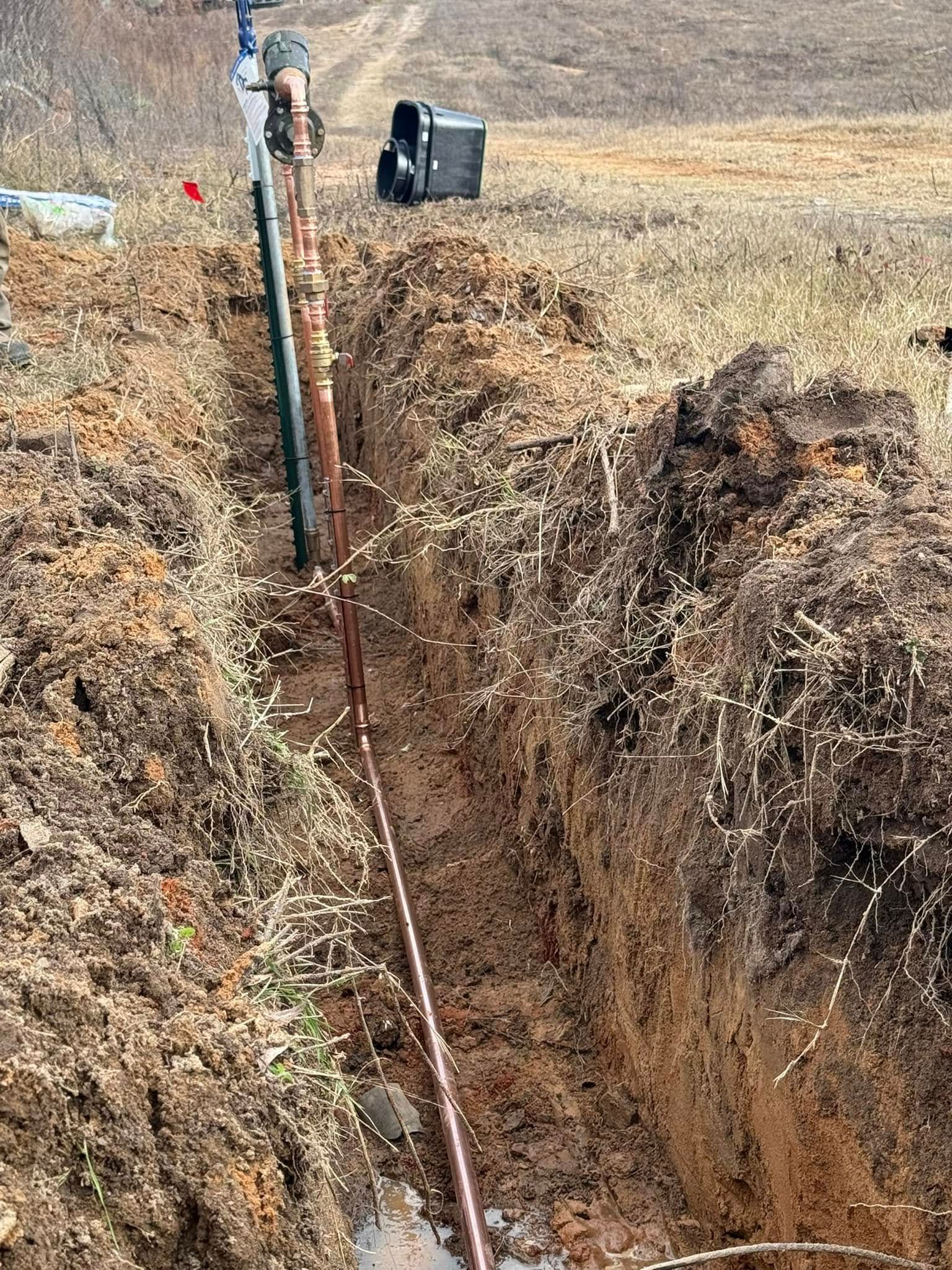
Drainage Restored Without Complete Replacement
Sewer Line Repair in Hot Springs for blocked lines, root intrusion, and deteriorating underground pipes
Sewer line damage shows up as toilets that won't flush completely, drains that empty slower each week, sewage odors near foundation plantings, or wet spots in the yard where wastewater surfaces through saturated soil. These symptoms indicate underground sewer problems caused by aging pipe materials, tree roots penetrating joints searching for moisture, or ground movement that misaligns sections and creates low spots where solids accumulate. Anchor Plumbing handles sewer line repairs for residential and commercial properties throughout Hot Springs, Benton, Malvern, and surrounding areas, addressing blockages, leaks, and structural damage that compromise drainage before backups occur inside buildings.
Sewer line repair begins with diagnosing the location and nature of the problem using video inspection cameras that travel through the pipe and reveal cracks, root masses, collapsed sections, or grease buildup restricting flow. Repairs may involve augering root intrusions from pipe interiors, sealing cracks and joint separations, removing localized damaged sections and installing new pipe, or clearing years of accumulated scale that has narrowed the line. Shifting soil common in Arkansas can stress rigid sewer materials until joints separate, while tree roots from mature landscaping will infiltrate any opening where moisture escapes.
Schedule a sewer inspection to identify blockages, structural damage, and drainage problems before wastewater backs up into your property.
Why Sewer Problems Happen and How to Stop Them
Underground sewer lines fail when pipe materials deteriorate past their service life, typically four to six decades for clay tile and cast iron, or when external forces compromise the pipe through root intrusion, soil settlement, or compaction from vehicle traffic over shallow burial depths. Professional troubleshooting differentiates between blockages that can be cleared and structural failures requiring pipe repair or replacement, using video inspection to assess wall thickness, joint condition, and whether the pipe maintains correct slope throughout its run. Early intervention on minor cracks and small root intrusions prevents complete blockages that force sewage backward through fixture drains.
After sewer line repairs finish, drains empty quickly without gurgling sounds that indicate venting problems, toilets flush completely on the first attempt, and sewage odors no longer appear around your property. Repairs restore proper drainage gradient so wastewater moves by gravity without pooling in low spots where solids separate and cause future blockages.
Sewer repair also includes evaluating whether localized repairs will provide long-term reliability or if deterioration has progressed to the point where full replacement makes better economic sense. A pipe with one collapsed section may have other areas near failure, and assessing overall condition prevents spending repair money on a line that will fail again within months.
What Property Owners Usually Ask
Homeowners and business operators dealing with sewer problems in the Hot Springs area frequently need information about repair options and what causes underground drainage failures.
What warning signs indicate sewer line problems before major backups occur?
Drains that empty progressively slower over weeks, gurgling sounds when fixtures drain, sewage odors around the foundation, or patches of unusually green grass where leaking wastewater fertilizes the lawn all suggest developing sewer issues.
How do tree roots get inside sewer pipes?
Roots follow moisture vapor escaping through hairline cracks or joint gaps, then expand once inside the pipe, eventually forming dense masses that trap waste and toilet paper until complete blockages develop.
When can sewer lines be repaired instead of replaced?
Localized damage from root intrusion, small cracks, or single joint failures can often be repaired if the surrounding pipe remains structurally sound, but widespread deterioration, multiple collapsed sections, or severe corrosion typically warrant full replacement.
What causes sewage backups during heavy rain in Hot Springs?
Older combined sewer systems can overwhelm during storms, but more commonly, rainwater enters damaged sewer lines through cracks and broken joints, filling capacity meant for sewage and causing backups, or saturated soil prevents proper drainage from septic systems.
Why do some properties experience repeated sewer problems after repairs?
Repairs that address symptoms without correcting underlying causes—incorrect slope, inadequate pipe sizing for fixture load, or ongoing root intrusion—will fail again, requiring diagnosis of why the original installation underperforms.
Anchor Plumbing provides sewer line repair service throughout Central Arkansas, diagnosing underground drainage problems and implementing repairs that restore function without unnecessary excavation. Contact us to arrange sewer line inspection and receive repair recommendations based on actual pipe condition.